Saturday, November 6, 2010

Golen's Gorgeous Jugenstile Tiles

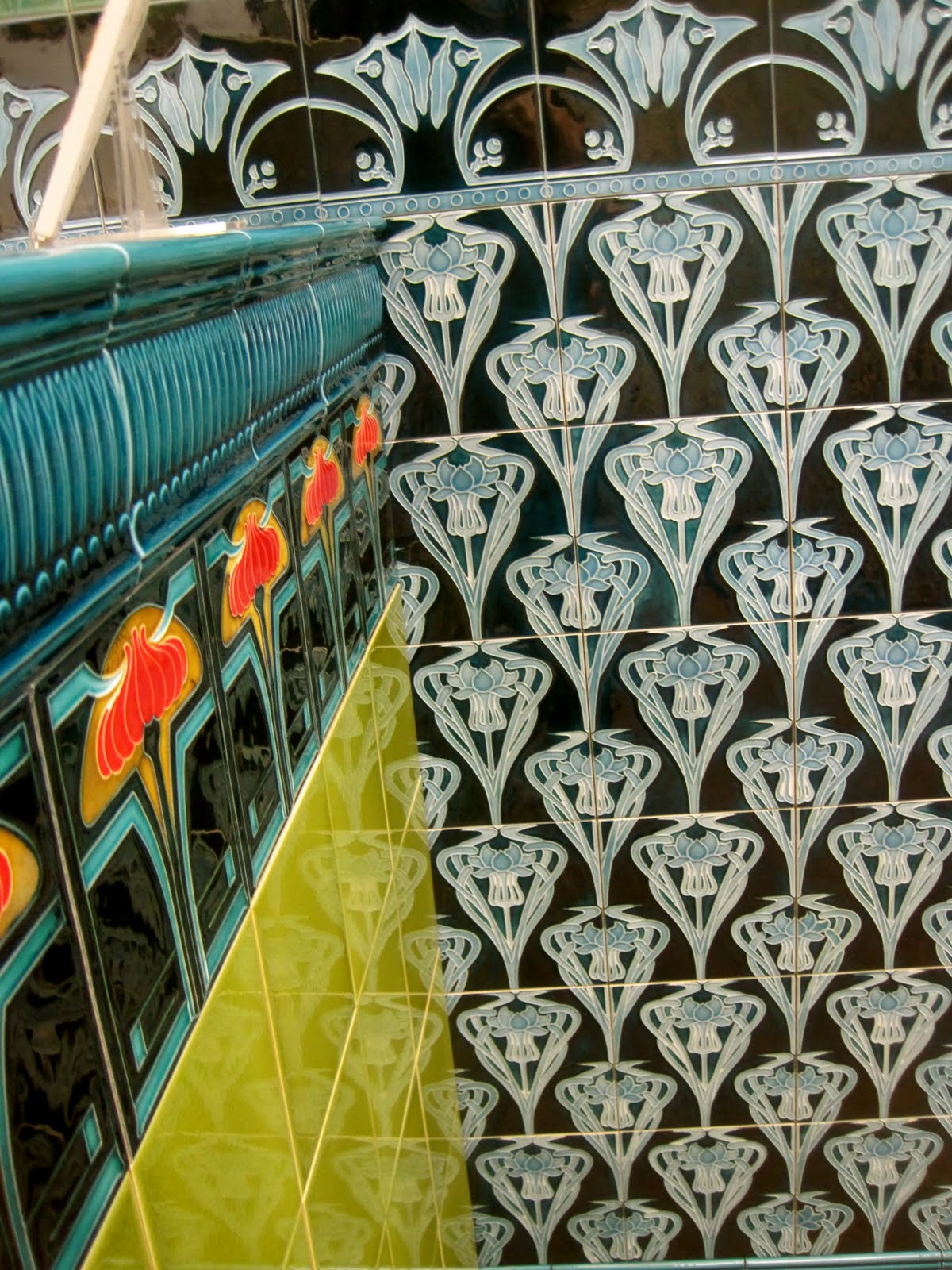
Berlin's Hackesche Höfe is a series of nine interconnected courtyards and their surrounding buildings. The unusual tile-covered facades in the first courtyard add color, pattern and a festive ambiance.


One of the shops in one of the courtyards, Golem, sells gorgeous Jugenstile tiles and provided tiles for the restoration of these facades.

I like the drama of these Golem tiles, both for their peacock reference and watercolor effect. They seem to have a bit of an Egyptian feel to me and would love to see these in a bathroom...maybe my bathroom.

Or, ahhh, perhaps these:


The shop offers quite a variety of lovely designs and colors.

Beautiful!


They also have some delightful floor patterns. I like this sampler and would be thrilled to have it in my laundry room. Durable, long-lasting ceramic tiles seem to make a lot of sense when we are trying to reduce our use of synthetic materials and toxic chemicals. I appreciate good design and I like change; admittedly, I sometimes move furniture around or buy things just for a change. However, I also like the attitude in much of Europe to build substantial buildings and to not destroy them when they go out of 'fashion' or when some company wants to build a chain store that looks like every other one of their stores across the country. There is something satisfying—as well as green—about building quality and enjoying it for a long, long time.


Friday, November 5, 2010

Germany's Bundestag

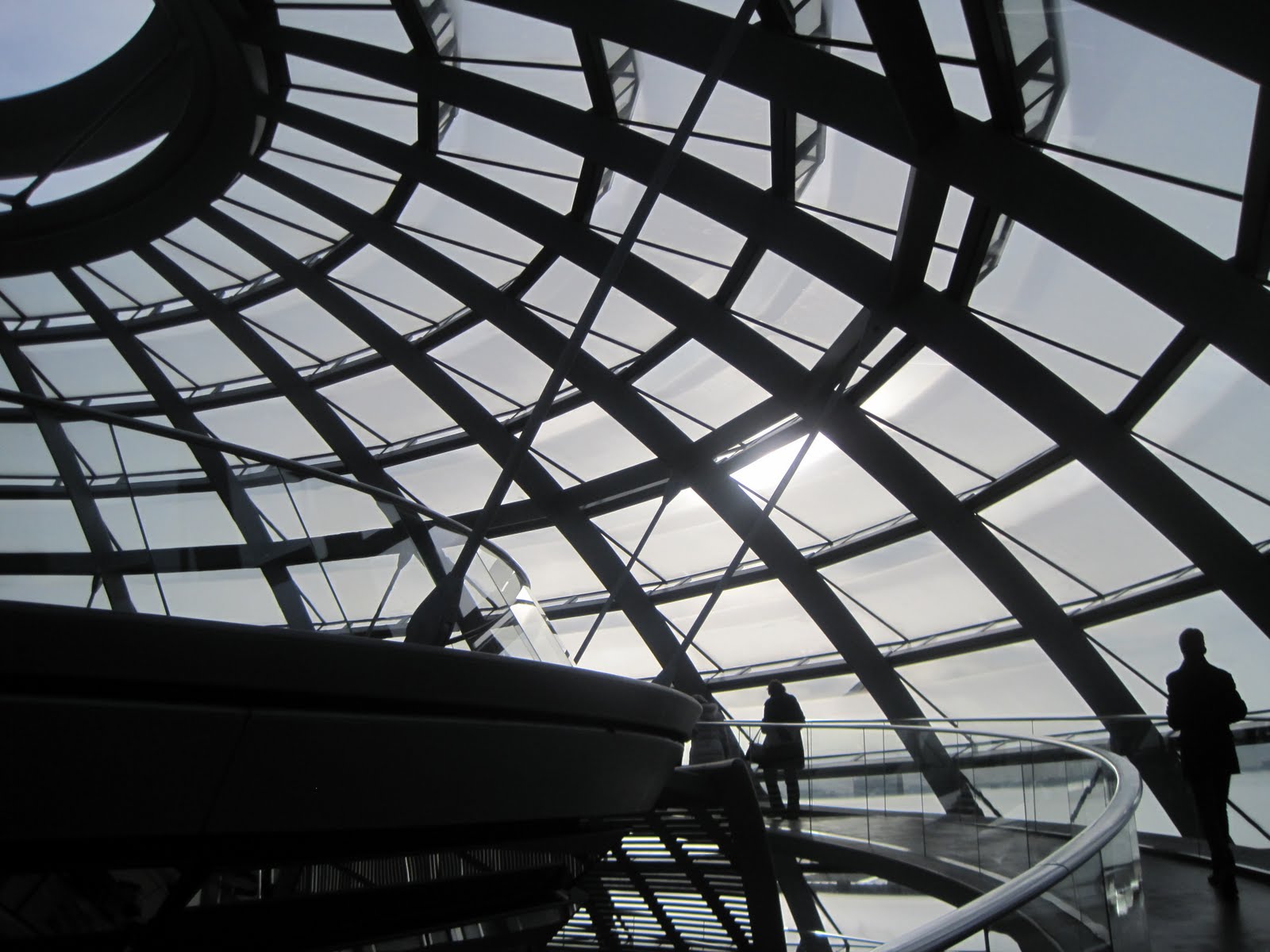
Germany's Parliament is housed in the Bundestag, a restored historic building topped with a new and very popular glass dome, designed by the British architect, Lord Norman Foster.


The dome and the glass roof above the Parliament's chamber symbolizes transparency of the functioning of the government which holds seat in the auditorium below. The dome is lined with spiral walkways around a central column of moveable mirrors. The mirrors reflect natural light into the chamber.


A moveable screen made of metal tubes provides flexible shade, according to weather conditions.


The building also employs biodiesel generators, photovoltaic cells and geothermal heat pumps to reduce its demands on the electrical grid.


The geometry of the building provided a number of interesting angles...


...which was a good thing...


...since the early morning mist had made it difficult to see the views outside the windows. Still, it gave us some soft images.


While arriving before the mist cleared from the windows meant we didn't see much of the skyline of Berlin, it also meant we beat the long lines waiting to enter the building:


Thursday, November 4, 2010

Berlin's Festival of Lights 2010

We happened to go to Berlin during their annual Festival of Lights. Even some carriages were lit.


The TV Tower, once a symbol of modernity for East Berlin:


The trees lining one of the most beautiful boulevards in Berlin, Unter den Linden (Under the Lime Trees) were transformed by colorful under-lighting.


The U.S. Embassy stayed bathed in red, white and blue while the Brandenburg Gate underwent broad color changes:


We found Berlin to be quite tourist-friendly. Projected on the Brandenburg Gate, for example, were facts about Berlin's history in both German and English!


This photo reminds me of a color negative, from back in the days of film:


Some of Berlin's hotels were competing for votes for the best light displays. The swanky Hotel Adlon, famous as being the place from which Michael Jackson dangled his baby, sported peace signs and ads:


I'm not sure if these buildings were doing anything different for the festival but I thought their lights and architecture were interesting:


Not festival lighting at Berlin's Tegel Airport but I liked the photo anyway, taken from a moving airplane. Tegel has a long history, notably for its role during the Berlin Airlift, but a new airport is scheduled to open in 2012 and Tegel is scheduled to close. Otto Lilienthal was an early engineer in glider technology who studied the aerodynamics of storks as a model for his hang gliders.


Monday, November 1, 2010

Schönbrunn Transformations

We had some welcome sunshine over the weekend and thought it would be a great time to check out the fall colors at Schönbrunn Palace, formerly the summer home of the Hapsburgs. The colors were more muted than my last autumn post from Schönbrunn (click HERE to compare) but still quite nice. For some reason, many trees here are still green, unlike past years when they were all bare by November 1.

There's some restoration work going on and it is a bit surprising (as well as calming) to see this portico stripped of its normal bright yellow paint.


A glance back shows the same area as it was (and presumably will be again). Often scaffolding on historic Viennese buildings are draped in a mesh fabric printed with an enormous, life-size photo of the structure. It seems the fabric is generally stretched tighter than here but I rather like the Christo-esque feel to this.


I absolutely love this palette of colors from a windblown collection of leaves in one of the large gazebos.


The muted colors approaching this fountain made me feel as if I had entered some antique paintings.


Yet areas of bright colors could be found elsewhere on the palace grounds.


I'm always amazed at how these hedges are trimmed so narrowly as to resemble a wall:


Someday soon these trees will form a complete tunnel:


I like the architecture of this public restroom. Would love to build a greenhouse in this style.


This statue is about to get her winter cloak:


The trellised rose bushes still have appeal sans flowers and most of their leaves: